Reforestation does not mean just planting as mangroves (once again) prove effectiveness in carbon sequestrati
Raymond Gregory Tribdino
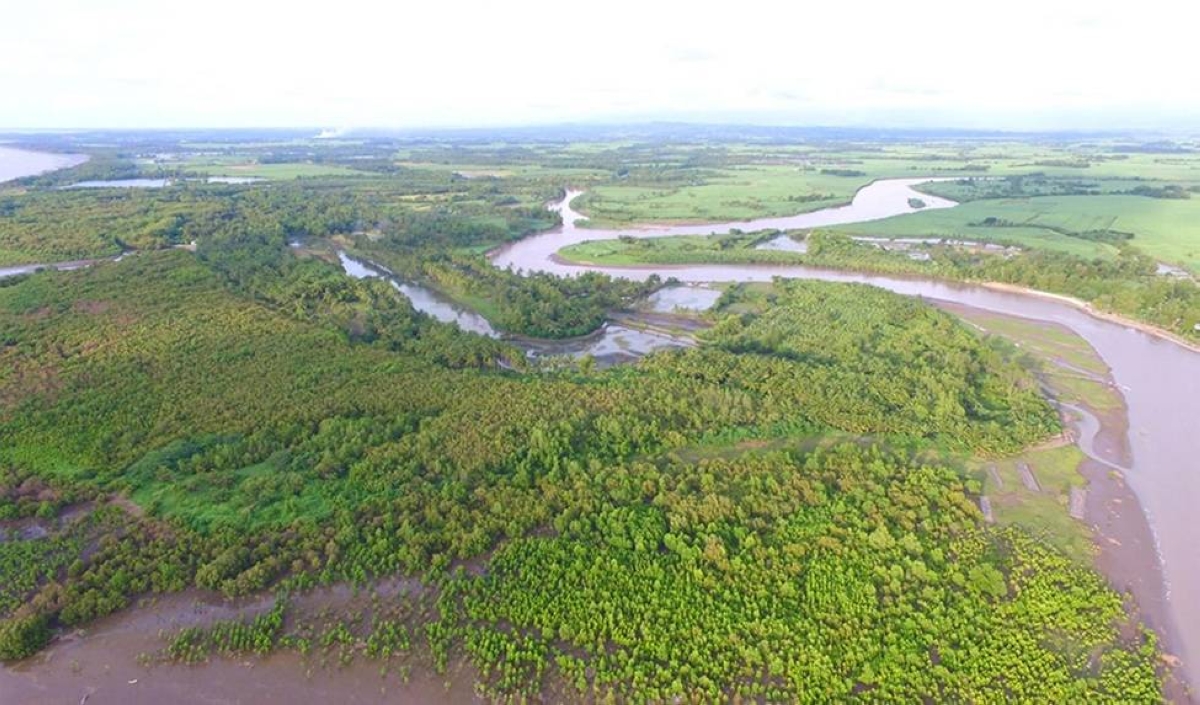
MANGROVES, along with tidal marshes and seagrasses, are increasingly recognized as vital "blue carbon" ecosystems. In tropical and subtropical coastlines, they are among the most productive natural systems, locking away atmospheric carbon dioxide (CO2) in coastal sediments for centuries while shielding shorelines from storms, erosion, and tidal surges.
A study by scientists at the University of the Philippines Diliman, published in 2024 reported just how much carbon dioxide can be contained by mangroves per hectare. Lead researcher Severino G. Salmo III and his team analyzed 458 soil samples across Oriental Mindoro and Sorsogon, developing the first localized carbon measurement equation specifically calibrated for Philippine conditions.
Their work established that Philippine mangroves hold between 102 and 576 megagrams of carbon per hectare, depending on forest age, soil conditions, and species composition. Crucially, the study revealed that previous estimates using generic foreign equations had actually overestimated the nation's mangrove carbon by 20 percent—a finding with profound implications for determining the country's true contributions to climate commitments under the Paris Agreement.
Understanding these true carbon values is essential not just for international reporting, but for designing restoration strategies that maximize the climate benefits of every peso spent and every seedling planted.
In April 2025, researchers from Beijing Forestry University published the first comprehensive global dataset of mangrove accumulated carbon storage (2000–2020) in the journal Scientific Data confirming the UP study. This pioneering work identified clear global patterns: Indonesia and Nigeria emerged as top hotspots, while the Philippines—part of the Southeast Asian concentration holding one-third of global mangrove cover—demonstrated substantial accumulated carbon storage, consistent with its third-place global ranking.
Not just planting
Early studies show how the Philippines lost 51.8 percent of its mangrove cover between 1918 and 2010. This has led to a massive push for reforestation, but science suggests that forest restoration not just the quantity of trees planted matter. Previously, the aim was to plant more trees (whether mangroves or other species) to compensate trees that do not mature.
Research published in September 2025 revealed that naturally regenerating mangroves often demonstrate higher carbon potential and survival rates than actively planted forests. This creates a confusing paradox: if nature does it better, why are we obsessed with planting?
The answer lies in the severity of the damage. In areas that are completely barren—such as abandoned fishponds or coastlines stripped of all vegetation—natural regeneration is impossible because there are no "mother trees" left to provide seeds.
This is where science-based restoration bridges the gap. The goal is not just to plant seedlings, but to mimic natural recovery. This involves Assisted Natural Regeneration (ANR): protecting remaining trees, correcting water flow, and only planting native species in areas that cannot recover on their own.
Ecological restoration
A report by the advocacy group Wetlands International Philippines documented failed initiatives where "mass planting" campaigns prioritized quantity over survival, often resulting in wasted resources and poor ecosystem recovery. To reverse this trend, the group is championing a shift toward Ecological Mangrove Restoration (EMR), a methodology designed to render traditional, low-survival planting tactics obsolete.
Unlike conventional methods that force seedlings into potentially unsuitable soil, EMR prioritizes fixing the environment first. The strategy focuses on re-establishing natural water flow and sediment balance—often by breaching old dike walls or reopening tidal channels—to create conditions where mangroves can thrive on their own. In this model, active planting is a secondary measure, deployed only when natural seed sources are scarce.
This biophysical approach is paired with community engagement to ensure the forest is socially sustainable as well as ecologically biodiverse. The goal is to institutionalize Community-Based EMR (CBEMR) as the definitive national standard. The potential for impact is vast: the Philippines possesses roughly 30,000 hectares of abandoned, undeveloped, and underutilized (AUU) fishponds primed for full recovery via EMR. An additional 30,000 hectares of active aquaculture zones have been identified as targets for adopting mangrove-friendly farming practices, effectively doubling the footprint of potential restoration.
Academic support
Academic institutions like the UP Marine Science Institute, the Ateneo de Manila, Bicol University, Central Bicol State University of Agriculture, Mariano Marcos State University, University of San Carlos, and Silliman University operate programs that utilize the EMR model. Universities align with private companies to ensure that there is a scientific approach applied, avoiding greenwashing and creating public-facing activities which have little or no benefit if there is no sustainable post-planting activity that follows.
Companies like Toyota and GCash, in their mangrove reforestation campaigns, defer to the recommendations of marine biologists to select the sites and species, ensuring projects avoid the common failure of planting mangroves in seagrass beds where they cannot survive.
GCash renewed its partnership with Silliman University in March 2025 to plant 500,000 mangroves in Negros Oriental using the "GForest" app, with site selection and species choice guided by Silliman's marine biologists.
Toyota’s latest mangrove restoration campaign in Pasuquin, Ilocos Norte operates under a tripartite agreement with Mariano Marcos State University and translates scientific evidence into landscape-scale impact.
The Climate Change Commission (CCC) has backed this shift, reclassifying mangroves as "green-gray infrastructure" in the National Adaptation Plan (NAP). By treating mangroves as engineered assets that require maintenance, the government is aligning national policy with the scientific reality that restoration is a long-term discipline, not a one-day event.
For a coastal nation facing increasingly severe typhoons and holding 3 percent of the world's mangrove cover, that is constantly under threat of from uncontrolled tourism, urbanization, pollution, the convergence of rigorous science, institutional commitment, and policy support represents not just environmental necessity, but also of economic opportunity.
en
2025-12-19T16:31:32.0000000Z
2025-12-19T16:31:32.0000000Z